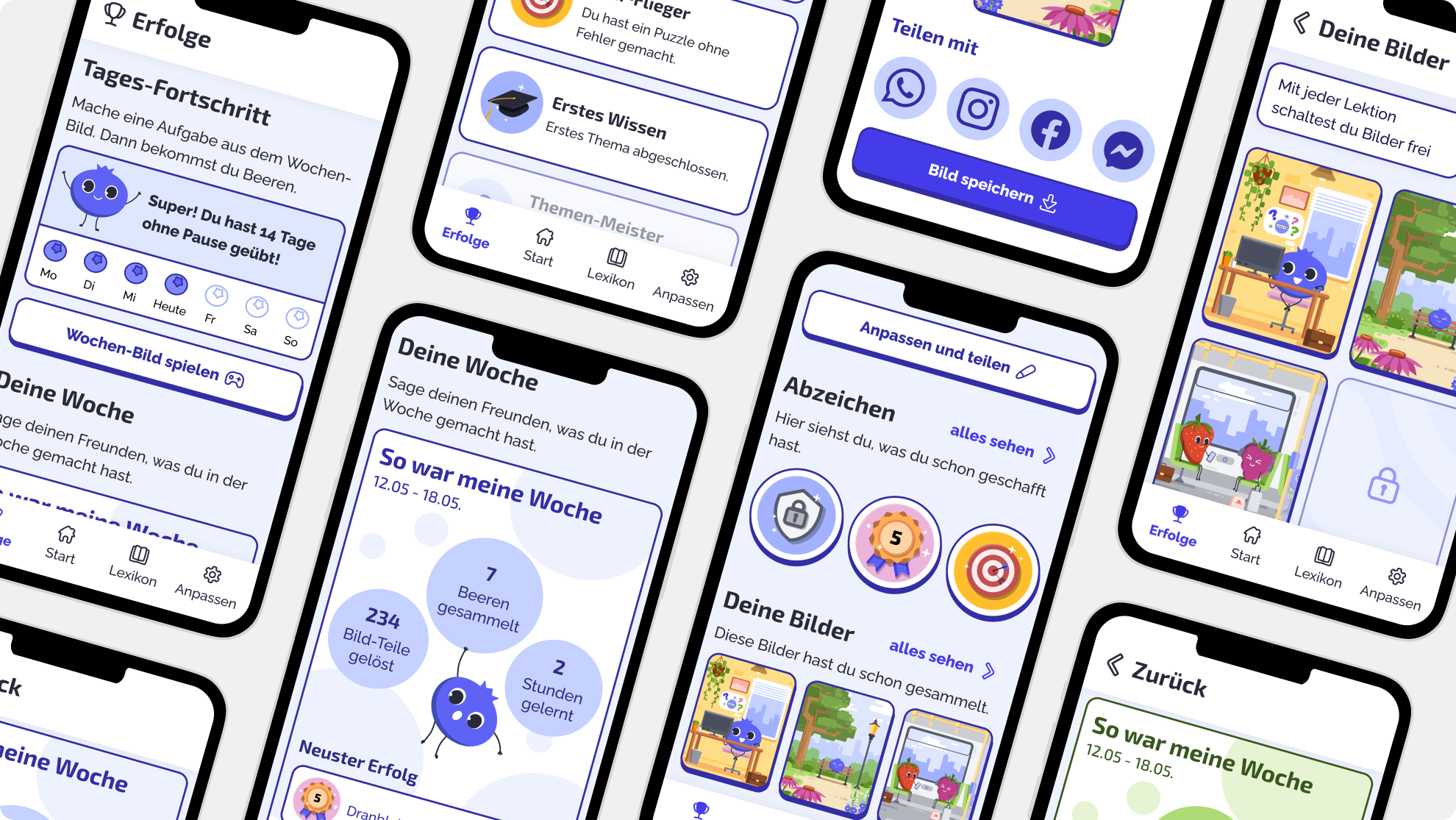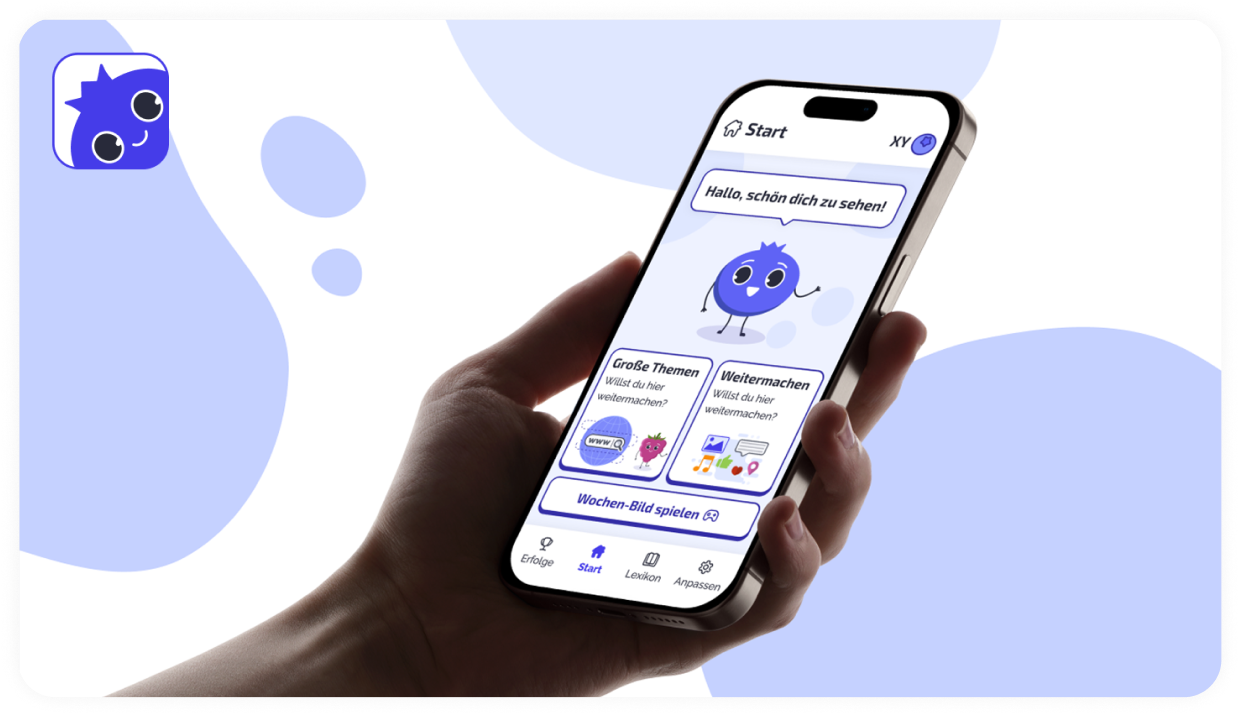
As part of an academic UX/UI design project, we collaborated with Caritas Augsburg, a social welfare organisation supporting people in different life situations. The project focused on designing an accessible and engaging mobile learning app for people with cognitive disabilities, helping them develop everyday digital skills and become more confident and independent when using digital technologies.
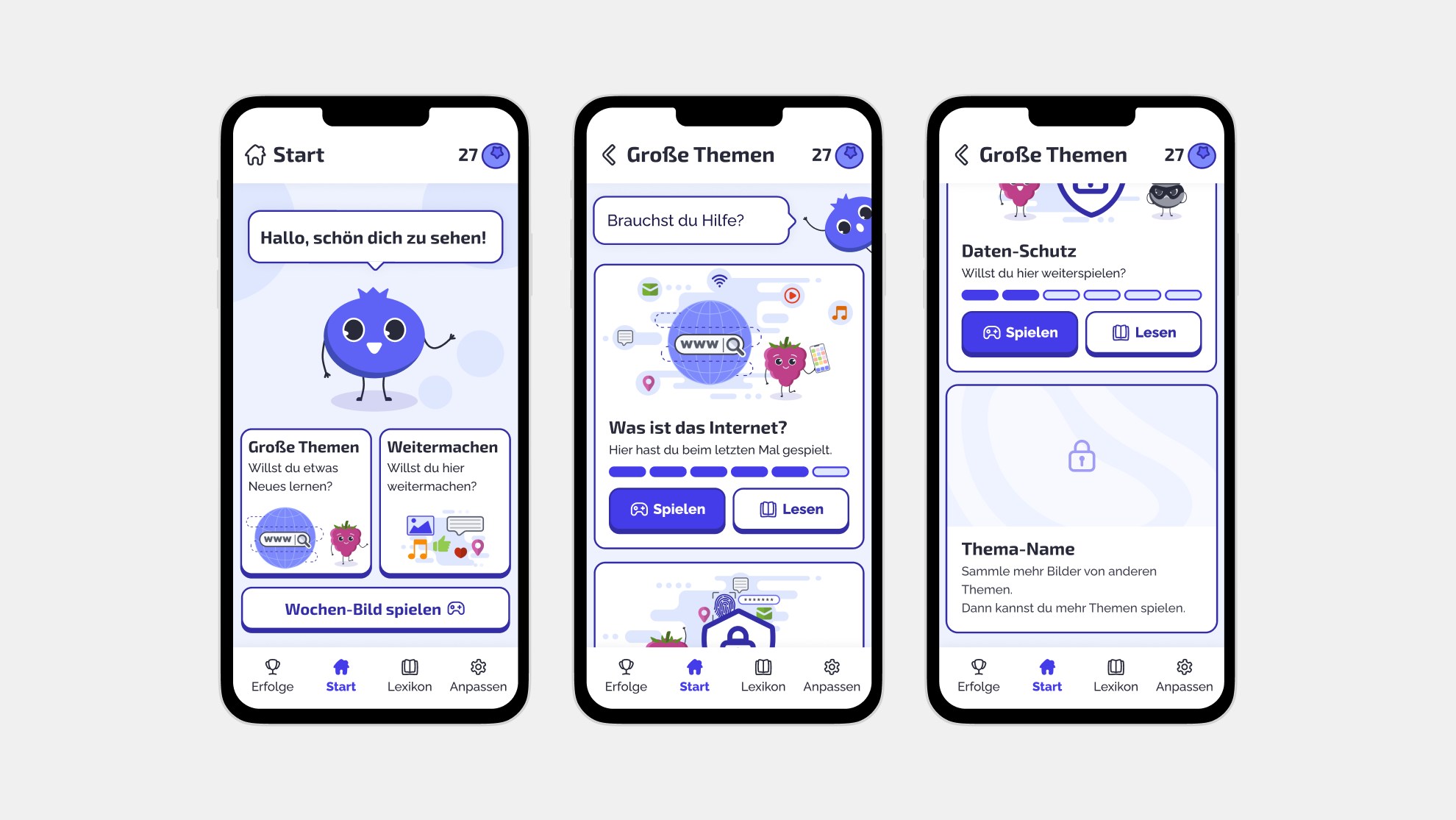
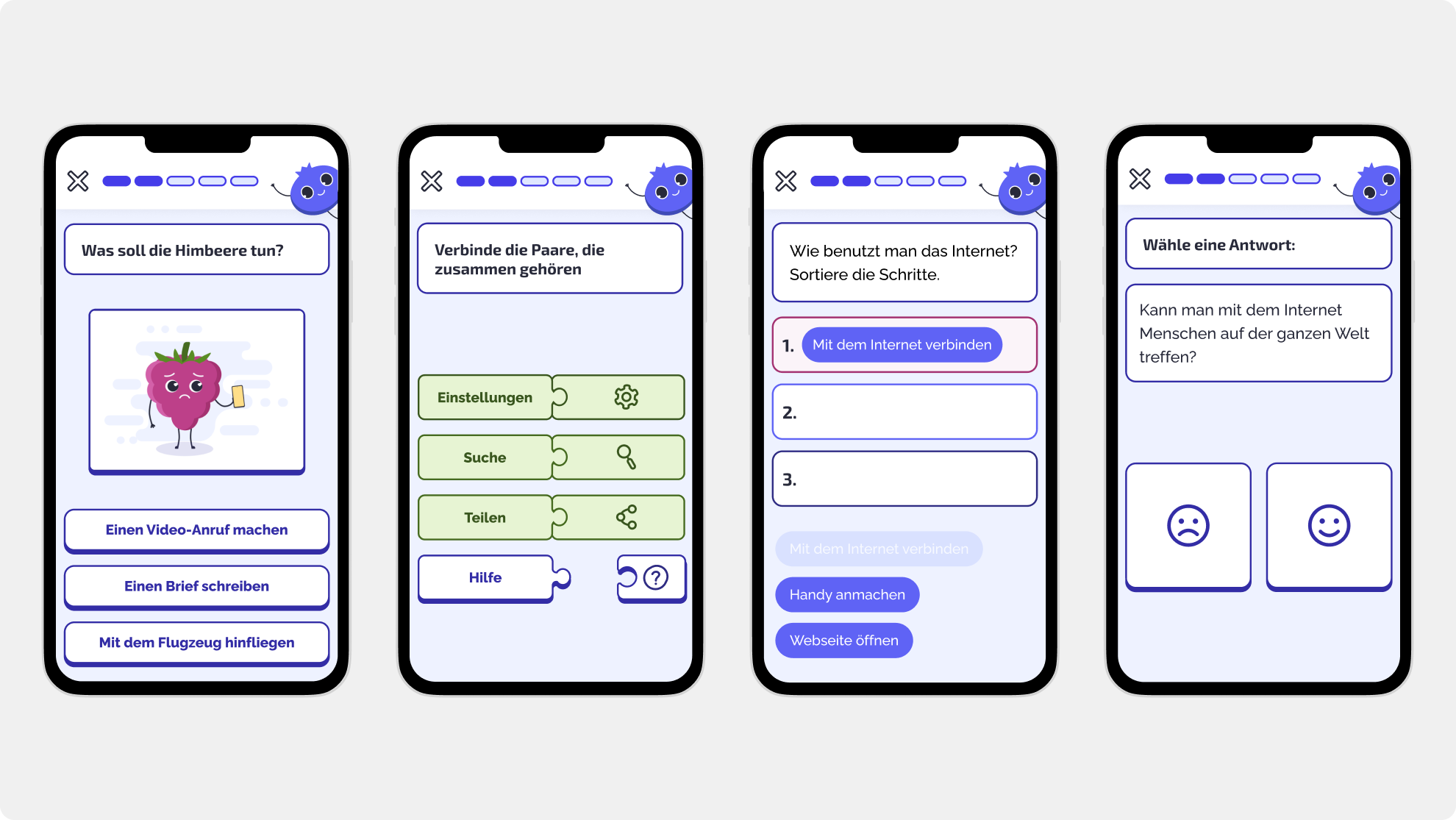
The task was to design a mobile learning app that combines educational content with gamification through interactive exercises and playful elements. The app was intended to help users develop everyday digital skills, such as navigating smartphone settings or recognizing phishing attempts, and apply what they learned in real-life situations.
Designing for people with cognitive disabilities required us to look beyond our own assumptions and understand barriers that might not be immediately obvious to us. The challenge was to create an engaging learning experience with clear, accessible content and an intuitive interface that encourages users to learn and practice independently, without oversimplifying the content or making the experience feel restrictive.
The research included conversations and practical smartphone tasks across two Caritas facilities, as well as interviews with supporting professionals and older adults as a secondary research group. We combined observation, open conversations, and hands-on tasks to understand how participants navigated familiar and unfamiliar digital interactions. Desk research into accessibility, digital literacy, and gamification complemented our findings and helped translate research insights into design principles. Usability testing and A/B testing throughout the process helped us identify usability issues, compare design alternatives, and validate key decisions.
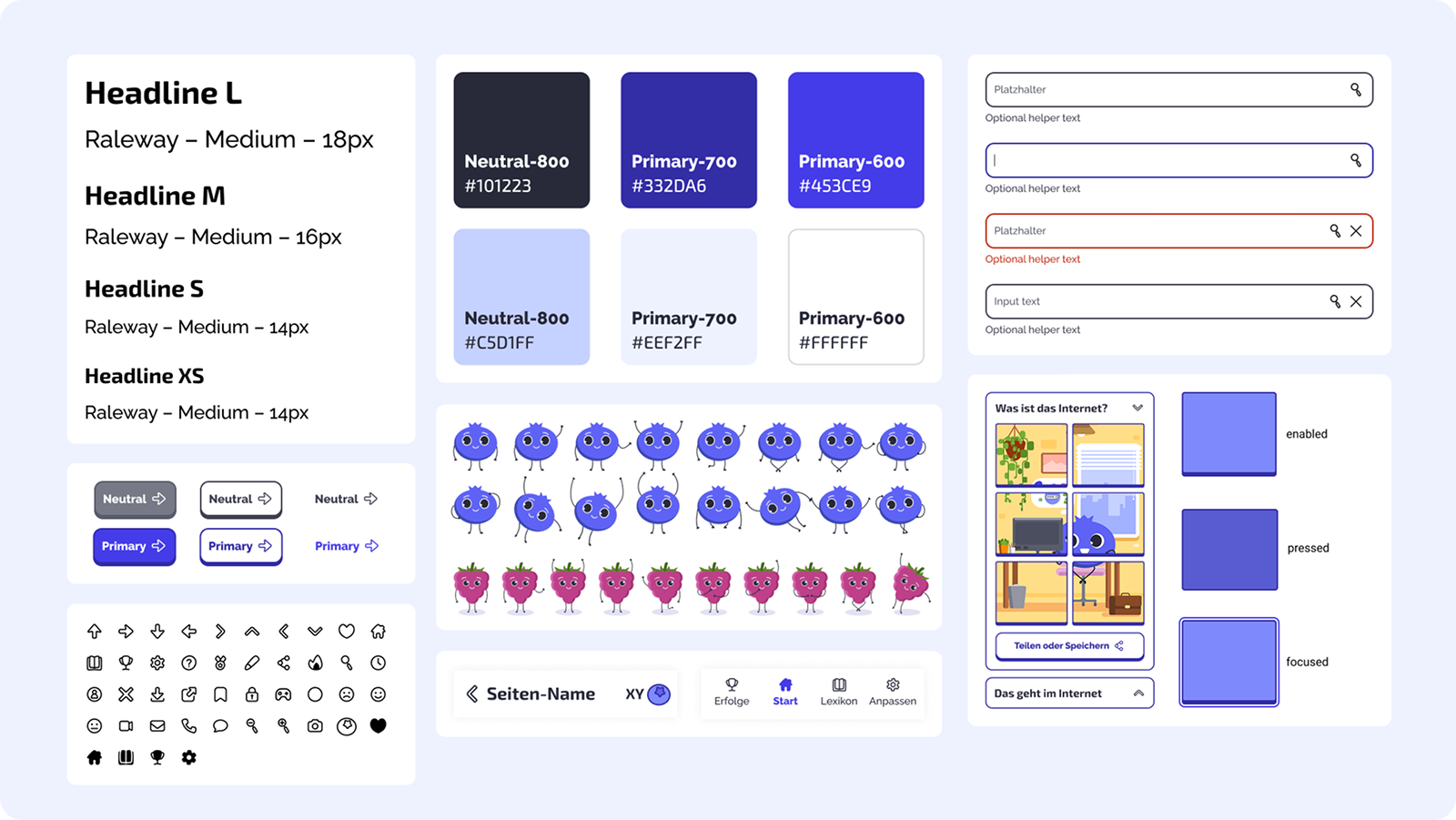
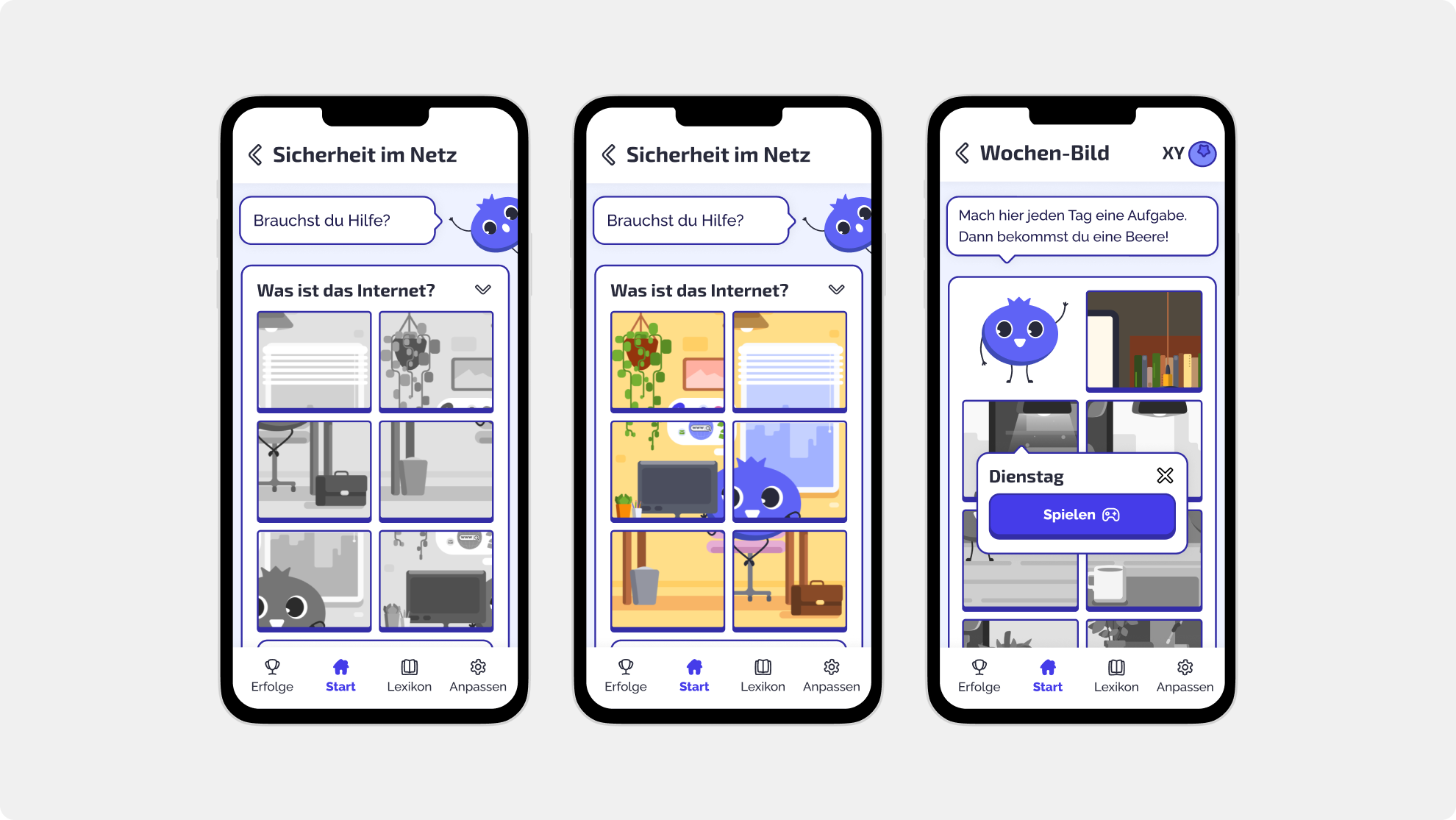
Our research led to four key principles: clarity, learning by doing, motivation, and accessibility. We translated these into simple language, clear visual hierarchy, accessible colors, and illustrations that support understanding beyond text. Interactive exercises encourage learning through practice, while the playful puzzle progress system and Schlaubeere mascot provide motivation, guidance, and feedback. Inclusive design and accessibility was considered throughout the interface and development to support different needs and abilities.